
Sickle-cell warriors advocate premarital genetic screening to protect children
By Michaella Faith Wright
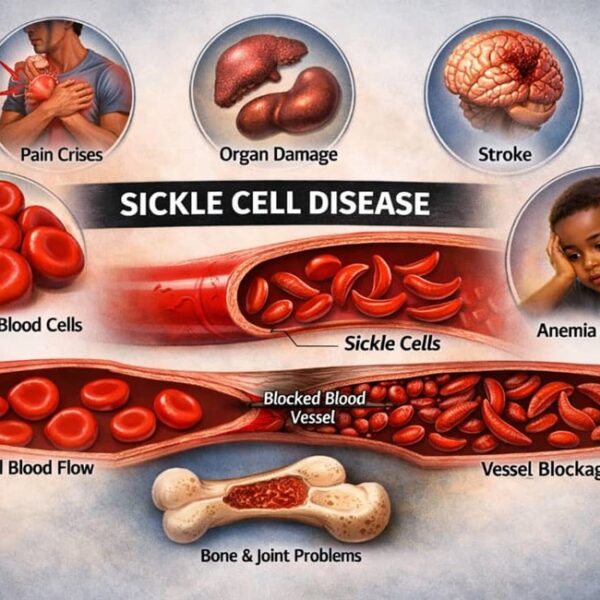
Sickle-cell anemia affects blood flow, causes severe pain and other complications (Photo: AI generated)
Awa Baldeh, born with sickle-cell anemia, believes a pre-marital genetic test by interested would-be couples could save their children from the disease.
“Information could empower individuals to make informed decisions that could spare future generations from similar struggles. If two people know their genetic status before marriage, many children can be protected from this suffering,” she said.
As she continues navigating life with the disease, the 23-years-old hopes her story would inspire empathy, understanding, and action. “We are warriors,” she said quietly. “And every day we fight for life, hope, and a better tomorrow.”
A Sierra Leonean resident of Salaji, Adama Kargbo, lost her 29-year-old daughter last year to complications linked to sickle cell disease. She said her daughter’s diagnosis came late, exposing gaps in awareness and testing that existed at the time.
“When my daughter was born, we did not know she had sickle cell,” Kargbo said. “Even us as parents did not know our genetic status until later after many tests. By then, marriage had happened and the reality was already there.”
The loss has transformed Kargbo into an advocate for premarital screening and early testing. “Today, things are changing. People should know their status before marriage, so they do not endanger the lives of their children,” she emphasized.
A pediatrician, Dr. Lamin Makalo, stressed that genetic inheritance plays a central role, making screening and counseling vital preventive strategies. “When two carriers have a child, there is a significant risk that the baby will be born with sickle cell disease,” he said. “That is why genetic counseling and screening are very important preventive measures.”
Dr. Makalo said sickle cell remains a significant health challenge for affected individuals, who may also face increased vulnerability to infections and other life-threatening conditions, if care is inconsistent.
“Normal red blood cells live for several months, but sickle cells survive for a much shorter period, leading to persistent anemia,” Dr. Makalo explained. “These cells can also block blood flow, causing severe pain crises and other complications.”
He added that symptoms commonly begin during infancy and may include swelling of the hands and feet, jaundice, repeated infections, and growth challenges.
Beyond clinical management, experts said the condition presents social and economic burdens for families. Frequent hospital visits, medication costs, and the need for ongoing monitoring could strain household resources. Emotional stress and community misconceptions could further complicate patients’ experiences. Patients often experience chronic anemia, recurrent pain episodes, and complications affecting multiple organs.
Dr. Makalo believes societal attitudes must evolve alongside medical interventions. “As a society, we must not stigmatize people living with sickle cell disease,” he said. “Encouragement, emotional support, and regular medical follow-up can significantly improve quality of life.”
Ends