
THE PEOPLE’S CHOICE POLL: A PUBLIC PERCEPTION SURVEY ON THE 2026 GAMBIA FOOTBALL FEDERATION (GFF) ELECTIONS
SURVEY REPORT
Conducted by: Advanced Diploma 10 Students, Media Academy for Journalism and Communication (MAJaC)
Course: Strategic Communications and Public Relations
Survey Title: The People’s Choice: A Public Perception Survey on the 2026 Gambia Football Federation Elections
Number of Respondents: 282
Purpose: To assess public opinion on the upcoming GFF presidential election and identify the expectations and priorities of football stakeholders and supporters for the incoming Executive Committee.
EXECUTIVE SUMMARY
Football occupies a central place in Gambian society, attracting passionate support from fans across the country and among Gambians living abroad. However, while an electoral college decides the Gambia Football Federation (GFF) election, the majority of football supporters do not have a direct vote. This survey was therefore designed to provide the public with an opportunity to express its views on the leadership of Gambian football and the direction it should take in the coming years.
The People’s Choice Poll received 282 responses from people with different levels of involvement in football, including supporters, football administrators, former and current players, coaches, sports journalists, sponsors and club officials. The survey also gathered views from across The Gambia and from Gambians living abroad.
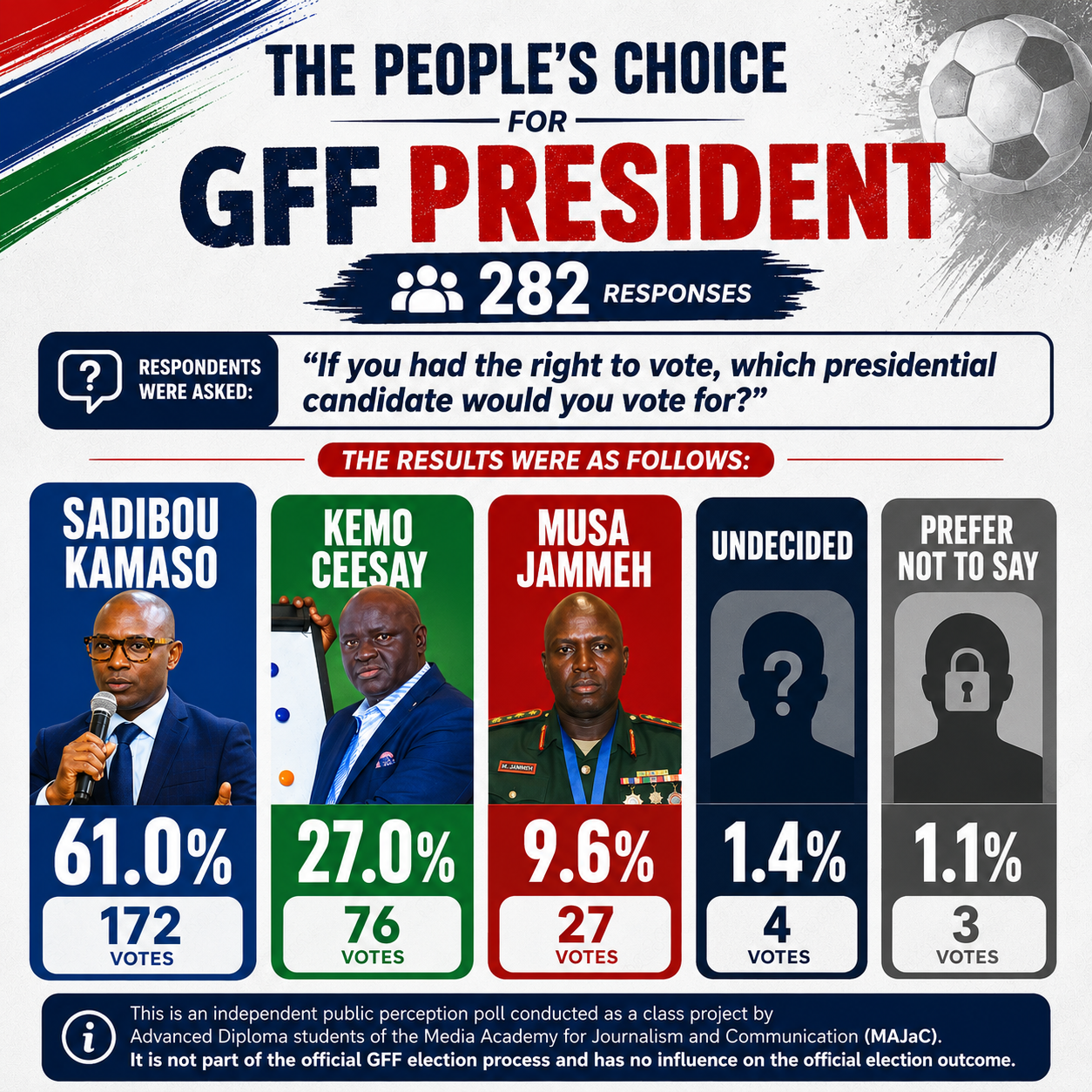
The findings indicate a clear public preference for Sadibou Kamaso, who received support from 61.0% of respondents. Kemo Ceesay received 27.0%, while Musa Jammeh received 9.6%. A small proportion of respondents were undecided or chose not to disclose their choice.
Beyond candidate preference, the survey reveals strong public expectations for the incoming GFF leadership. The most important priorities identified for the first 100 days were:
- Improving governance and transparency;
- Strengthening grassroots football;
- Upgrading football facilities;
- Improving financial accountability; and
- Increasing sponsorship and investment.
Respondents also identified grassroots football, infrastructure and governance as the areas requiring the most urgent attention.
The survey further reveals an overwhelming demand for better communication between the GFF, football supporters and the general public. 98.2% of respondents said the new Executive Committee should communicate regularly with the public. The preferred communication channels were the official GFF website, television and Facebook.
The overall message from respondents is clear: Gambian football supporters want leadership that is transparent, accountable, development-focused and more connected to the people.
1. INTRODUCTION
Football is widely regarded as the most popular sport in The Gambia. The passion of Gambians for the game has been particularly demonstrated through the historic qualification of the national team, the Scorpions, for the Africa Cup of Nations.
The 2026 Gambia Football Federation elections present another important moment for the future direction of Gambian football. While the official election will be decided by delegates within the GFF electoral structure, football supporters across the country remain important stakeholders whose opinions and expectations deserve to be heard.
For this reason, Advanced Diploma 10 students of the Media Academy for Journalism and Communication (MAJaC), as part of their Strategic Communications and Public Relations course, conducted The People’s Choice Poll.
The survey sought to answer two central questions:
- If the public had the right to vote, who would they choose as GFF President?
- What should the incoming GFF Executive Committee prioritise during its first 100 days in office?
The survey also explored public views on governance, communication, infrastructure, grassroots football and the broader challenges facing Gambian football.
2. METHODOLOGY
The survey was conducted through an online questionnaire using Google Forms.
A total of 282 respondents participated in the poll.
The questionnaire collected information on:
- Gender;
- Age;
- Education;
- Region;
- Level of involvement in football;
- Interest in Gambian football;
- Awareness of the upcoming GFF elections;
- Preferred presidential candidate;
- Factors influencing candidate choice;
- Priorities for the first 100 days;
- Areas requiring urgent attention;
- Expectations regarding communication with the public; and
- Open-ended views on the challenges and future of Gambian football.
For questions allowing respondents to select more than one answer, percentages represent the proportion of all 282 respondents who selected each option. Therefore, percentages in those questions do not add up to 100%.
3. PROFILE OF RESPONDENTS
3.1 Gender
The survey was dominated by male respondents.
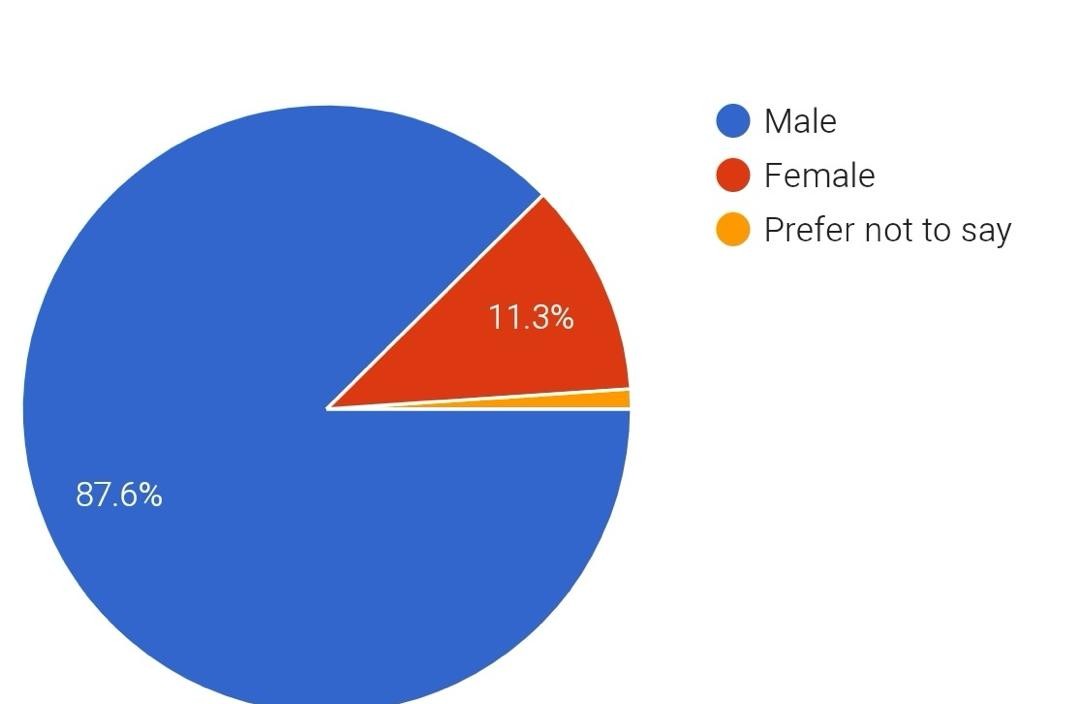
Male: 247 respondents (87.6%)
Female: 32 respondents (11.3%)
Prefer not to say: 3 respondents (1.1%)
This means that the findings reflect a substantially male-dominated sample. Future surveys may benefit from additional targeted efforts to increase the participation of women in football-related public opinion research.
3.2 Age
The largest groups of respondents were between 25 and 44 years old.
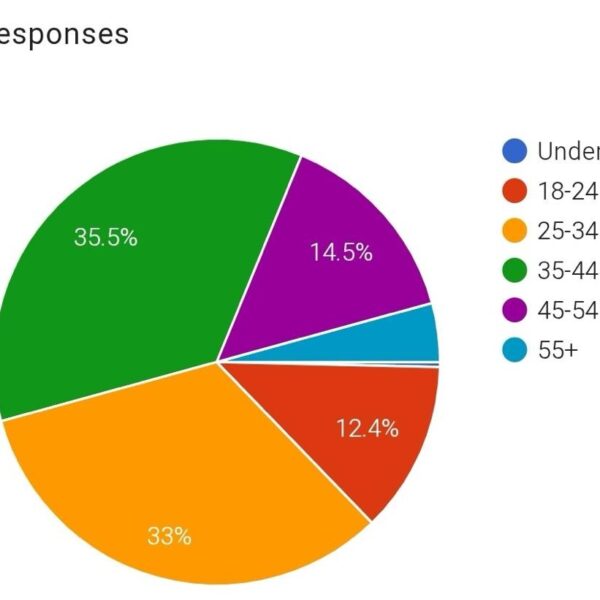
Under 18: 1 respondent (0.4%)
18–24: 35 respondents (12.4%)
25–34: 93 respondents (33.0%)
35–44: 100 respondents (35.5%)
45–54: 41 respondents (14.5%)
55 and above: 12 respondents (4.3%)
Together, respondents aged 25 to 44 accounted for 68.5% of the total sample, making this the dominant age group in the survey.
3.3 Regional Representation
The survey received responses from all major parts of the country, as well as from Gambians living abroad.
The largest number of respondents came from:
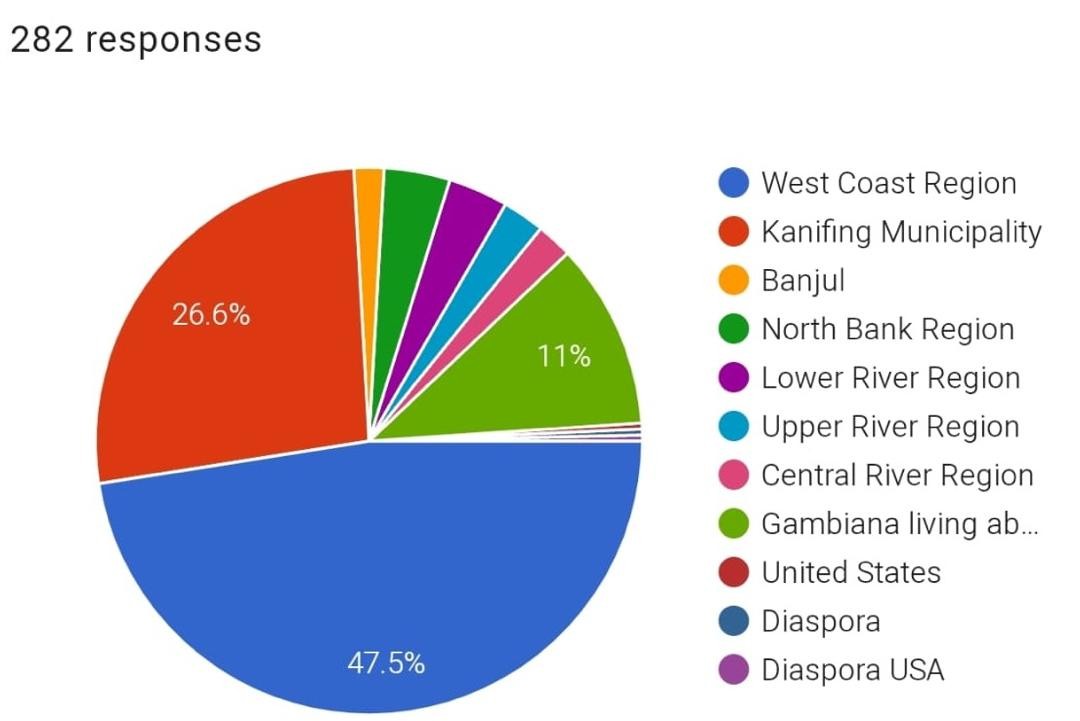
West Coast Region: 134 (47.5%)
Kanifing Municipality: 75 (26.6%)
Gambians living abroad: 31 (11.0%)
The remaining responses came from North Bank Region, Lower River Region, Upper River Region, Central River Region, Banjul and other diaspora locations.
The findings therefore have a strong concentration in the Greater Banjul Area and West Coast Region.
3.4 Involvement in Football
The respondents represented different parts of the football community.
The largest groups were:
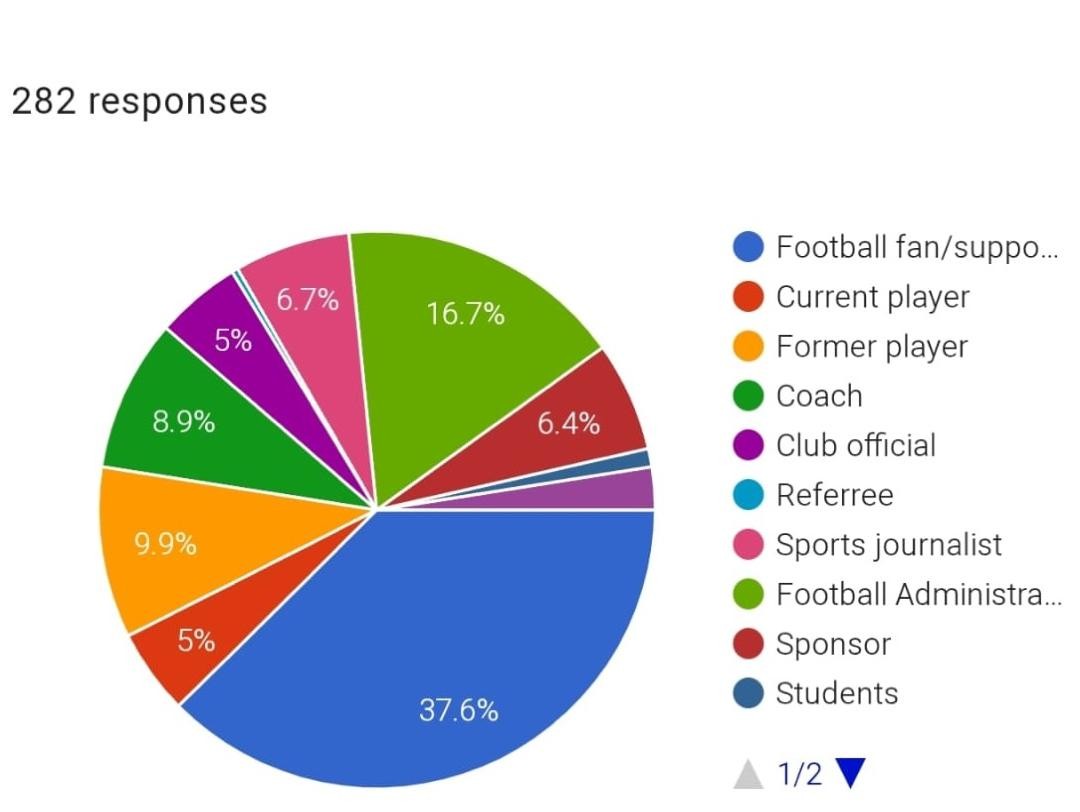
Football fans/supporters: 106 (37.6%)
Football administrators: 47 (16.7%)
Former players: 28 (9.9%)
Coaches: 25 (8.9%)
Sports journalists: 19 (6.7%)
Sponsors: 18 (6.4%)
Current players: 14 (5.0%)
Club officials: 14 (5.0%)
This shows that the survey did not only capture the opinions of ordinary supporters. It also included respondents with direct experience and involvement in different areas of Gambian football.
4. HOW CLOSELY DO RESPONDENTS FOLLOW GAMBIAN FOOTBALL?
The overwhelming majority of respondents indicated that they closely follow Gambian football.
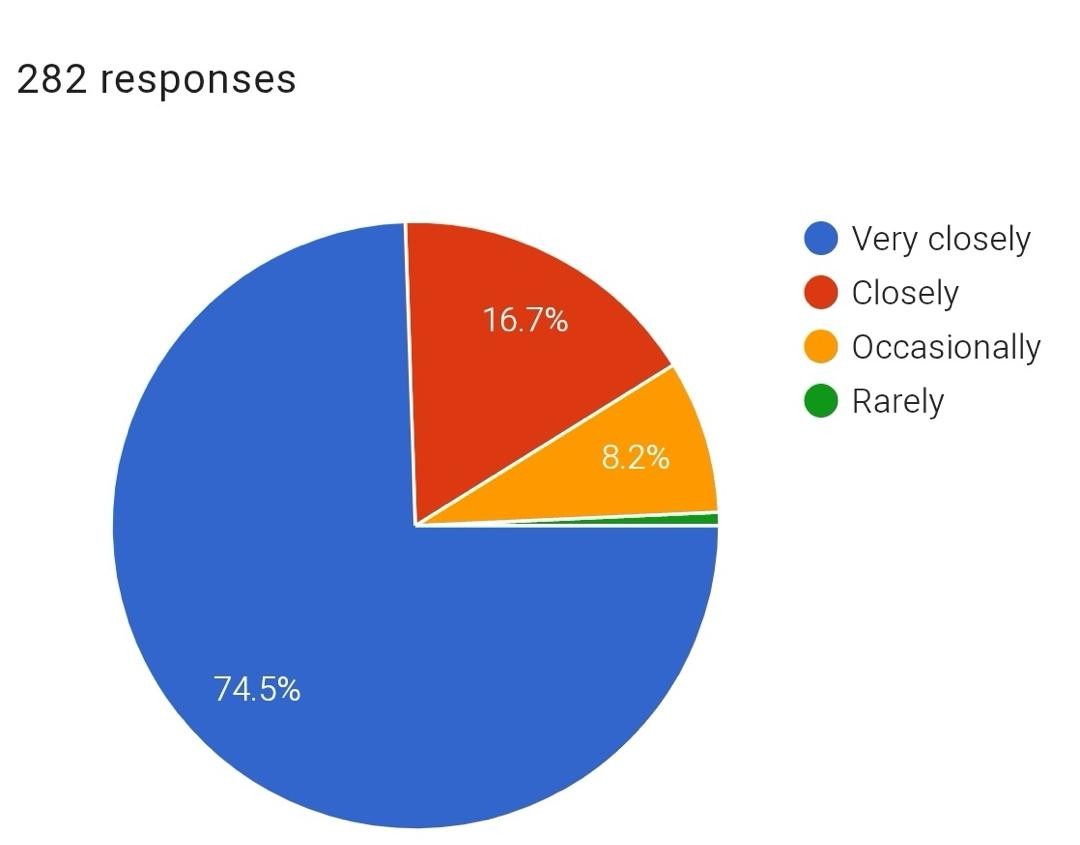
- Very closely: 210 (5%)
- Closely: 47 (7%)
- Occasionally: 23 (2%)
- Rarely: 2 (7%)
This means that 91.2% of respondents follow Gambian football either very closely or closely.
The high level of interest strengthens the relevance of the opinions expressed in the survey, although the poll should still be understood as a public perception survey rather than a scientifically representative national opinion poll.
5. AWARENESS OF THE GFF ELECTIONS
Awareness of the upcoming GFF elections was extremely high among respondents.
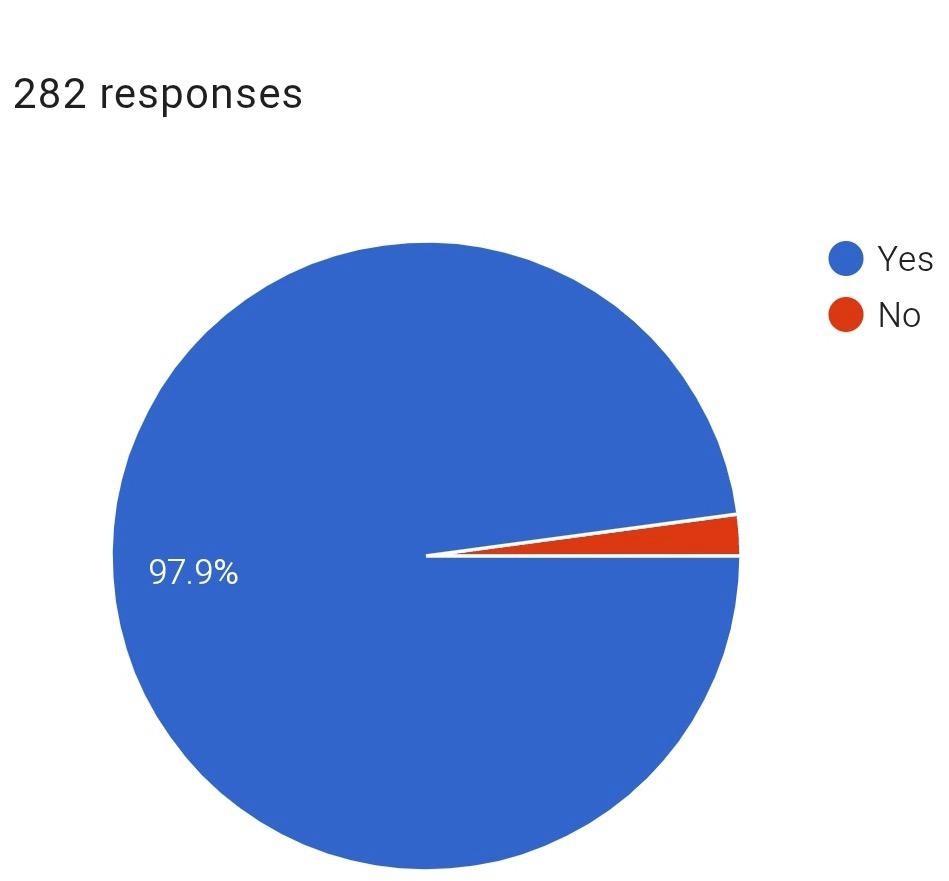
- Yes: 276 respondents (9%)
- No: 6 respondents (1%)
This indicates that the election had generated significant awareness among the respondents at the time of the survey.
6. THE PEOPLE’S CHOICE FOR GFF PRESIDENT
Respondents were asked:
“If you had the right to vote, which presidential candidate would you vote for?”
The results were as follows:
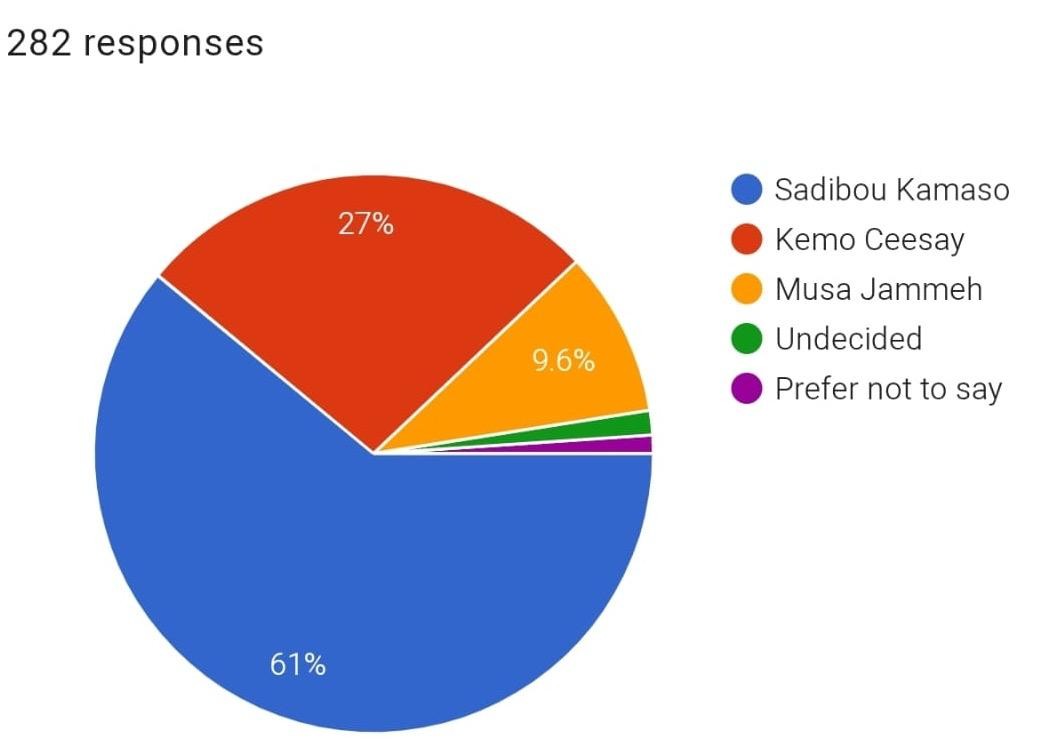
| Sadibou Kamaso | 172 | 61.0% |
| Kemo Ceesay | 76 | 27.0% |
| Musa Jammeh | 27 | 9.6% |
| Undecided | 4 | 1.4% |
| Prefer not to say | 3 | 1.1% |
Key Finding
Based on the 282 responses received, Sadibou Kamaso emerged as the clear public preference in this survey, receiving 172 responses or 61.0%.
Kemo Ceesay was the second most preferred candidate with 27.0%, while Musa Jammeh received 9.6%.
Important Note
This result represents the views of the people who participated in this survey. It does not predict, determine or have any legal effect on the official GFF election, which is decided through the Federation’s electoral process.
7. WHAT INFLUENCED THE PUBLIC’S CHOICE?
Respondents were asked to identify the factors that influenced their preferred candidate.
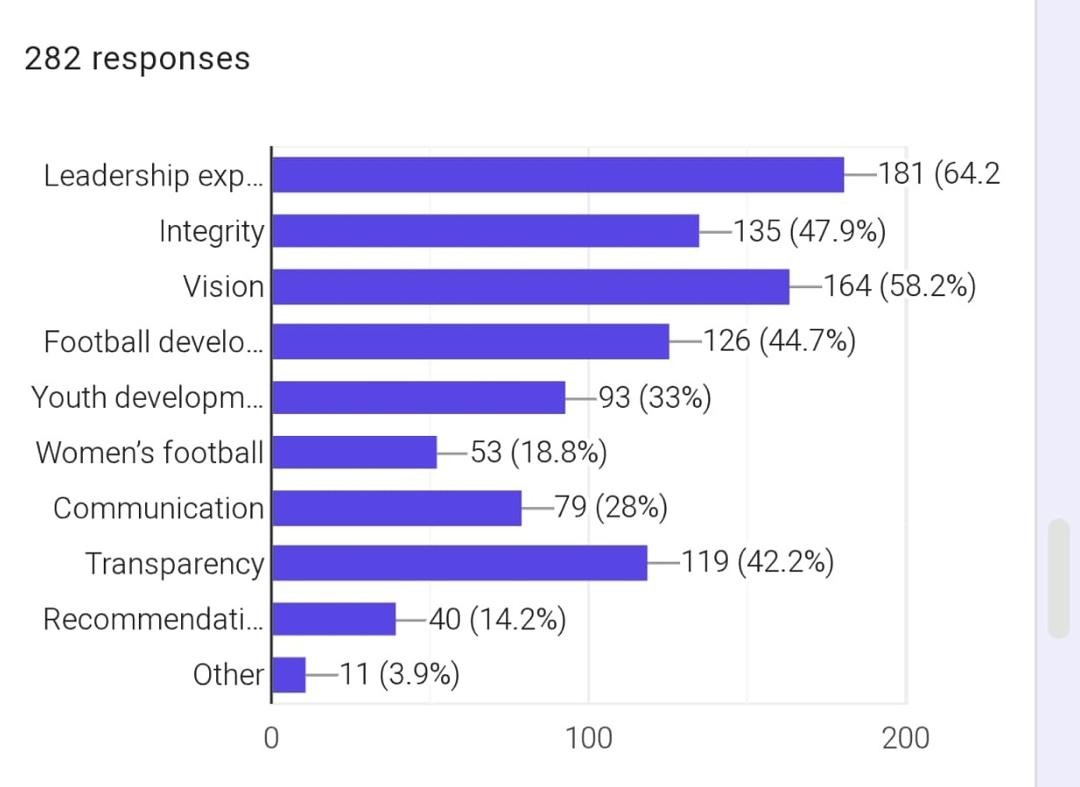
The leading factors were:
Leadership experience – 181 respondents (64.2%)
Vision – 164 respondents (58.2%)
Integrity – 135 respondents (47.9%)
Football development record – 126 respondents (44.7%)
Transparency – 119 respondents (42.2%)
Youth development – 93 respondents (33.0%)
Communication – 79 respondents (28.0%)
Interpretation
The results suggest that the public is looking beyond personality and popularity. Experience, vision and integrity were the three strongest considerations.
The importance placed on transparency and football development records also suggests that respondents want candidates to be judged by both their plans for the future and their demonstrated ability to contribute to the development of the game.
8. THE TOP PRIORITIES FOR THE FIRST 100 DAYS
Respondents were asked to select the five most important priorities for the incoming Executive Committee during its first 100 days.
The results were:
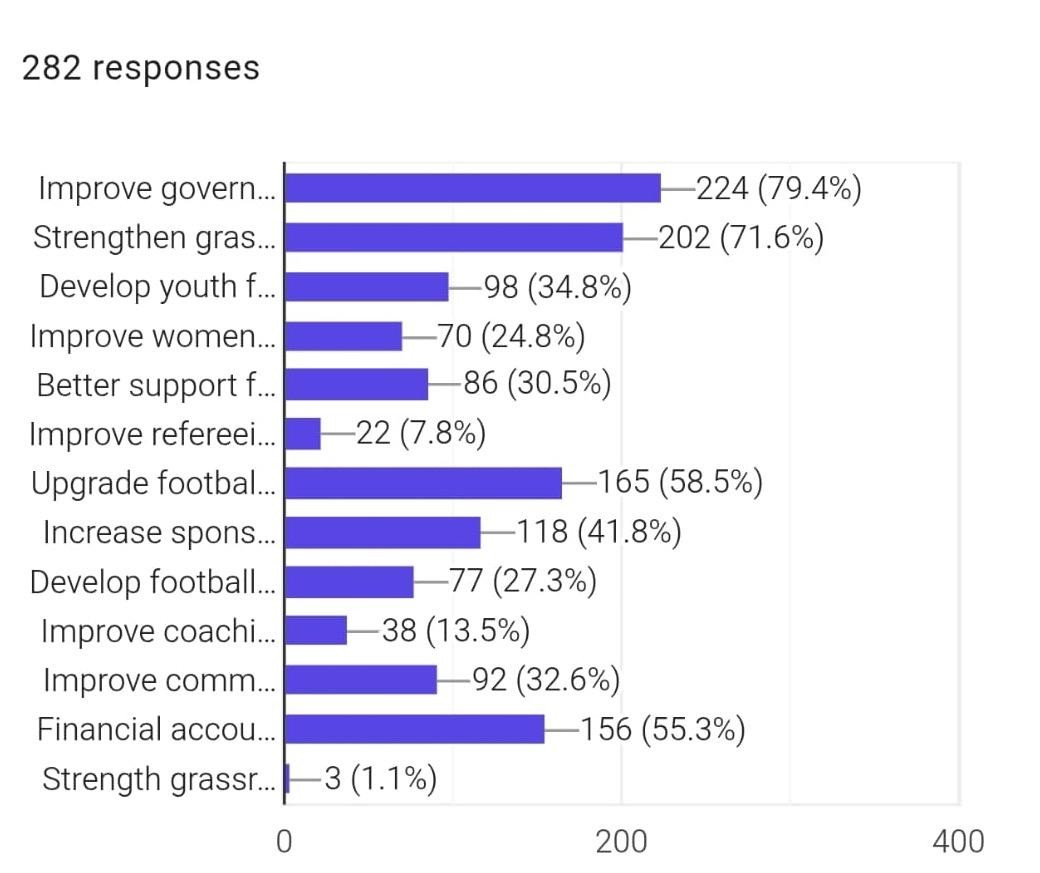
| Improve governance and transparency | 224 | 79.4% |
| Strengthen grassroots football | 202 | 71.6% |
| Upgrade football facilities | 165 | 58.5% |
| Financial accountability | 156 | 55.3% |
| Increase sponsorship and investment | 118 | 41.8% |
| Develop youth football | 98 | 34.8% |
| Improve communication with the public | 92 | 32.6% |
| Better support for clubs | 86 | 30.5% |
| Develop football academies | 77 | 27.3% |
| Improve women’s football | 70 | 24.8% |
| Improve coaching education | 38 | 13.5% |
| Improve refereeing | 22 | 7.8% |
The Public’s Top Five Agenda
The five issues respondents most want the new Executive Committee to address are:
1. Improve Governance and Transparency
This was the strongest priority, selected by nearly four out of every five respondents.
2. Strengthen Grassroots Football
Respondents clearly want greater attention to the foundation of football development.
3. Upgrade Football Facilities
The need for better playing fields, training facilities and other infrastructure remains a major concern.
4. Improve Financial Accountability
The public wants greater openness and accountability in the management of football finances.
5. Increase Sponsorship and Investment
Respondents believe the GFF must work harder to attract resources and investment into the game.
9. AREAS REQUIRING THE MOST URGENT ATTENTION
Respondents were also asked which areas of Gambian football require the most urgent attention from the incoming leadership.
The top responses were:
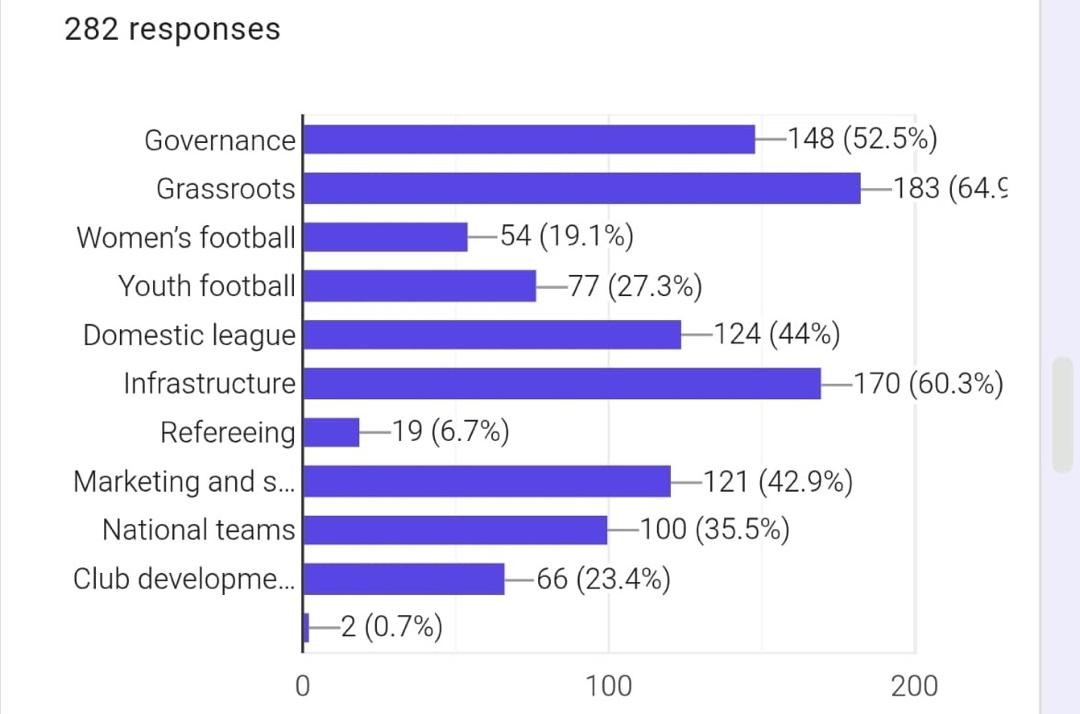
| Grassroots football | 183 | 64.9% |
| Infrastructure | 170 | 60.3% |
| Governance | 148 | 52.5% |
| Domestic league | 124 | 44.0% |
| Marketing and sponsorship | 121 | 42.9% |
| National teams | 100 | 35.5% |
| Youth football | 77 | 27.3% |
| Club development | 66 | 23.4% |
| Women’s football | 54 | 19.1% |
| Refereeing | 19 | 6.7% |
Key Message
The findings point to a clear development agenda.
Respondents believe that the incoming GFF leadership should not focus only on the national teams. They want stronger attention to the grassroots, infrastructure, governance and domestic football ecosystem.
10. SHOULD THE NEW GFF EXECUTIVE COMMUNICATE REGULARLY WITH THE PUBLIC?
The answer from respondents was almost unanimous.
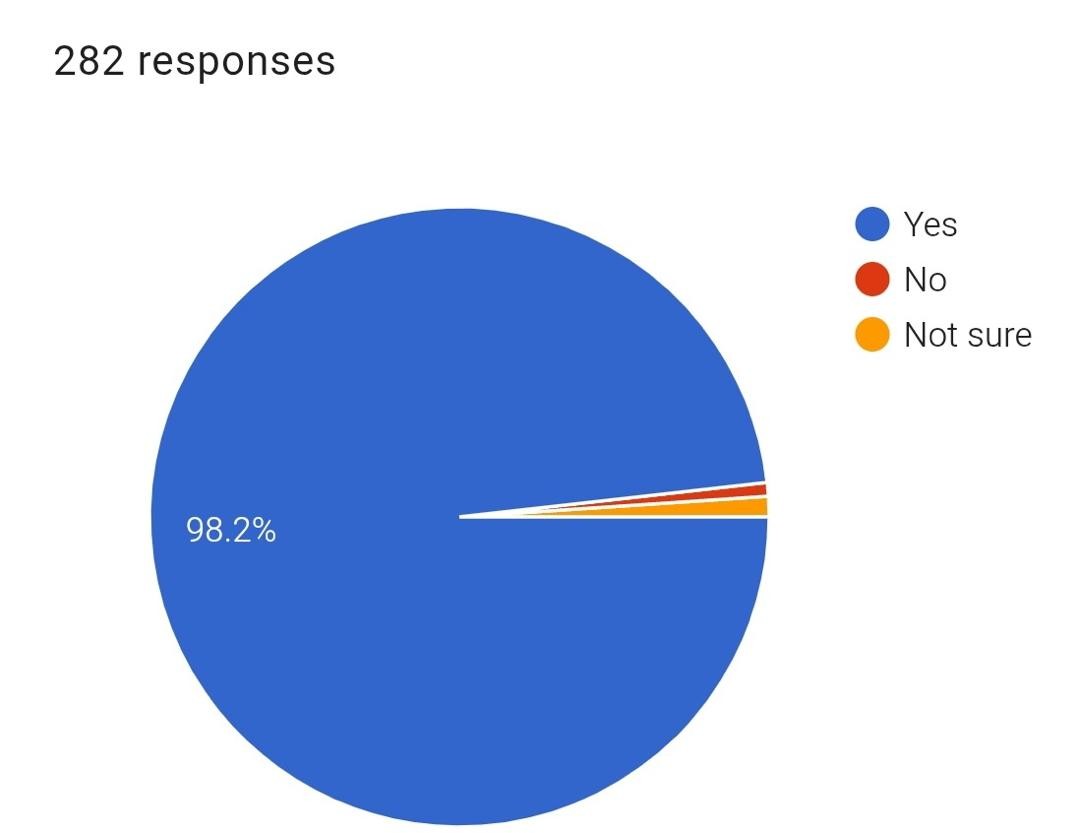
- Yes: 277 (2%)
- Not sure: 3 (1%)
- No: 2 (7%)
Key Finding
There is an overwhelming public demand for the new GFF Executive Committee to communicate regularly with football supporters and the wider public.
This is one of the strongest findings of the survey.
The public is clearly saying that communication should not be treated as an occasional activity. Respondents expect regular information, updates and engagement from the leadership of Gambian football.
11. HOW OFTEN SHOULD THE GFF UPDATE THE PUBLIC?
Respondents expressed the following preferences:
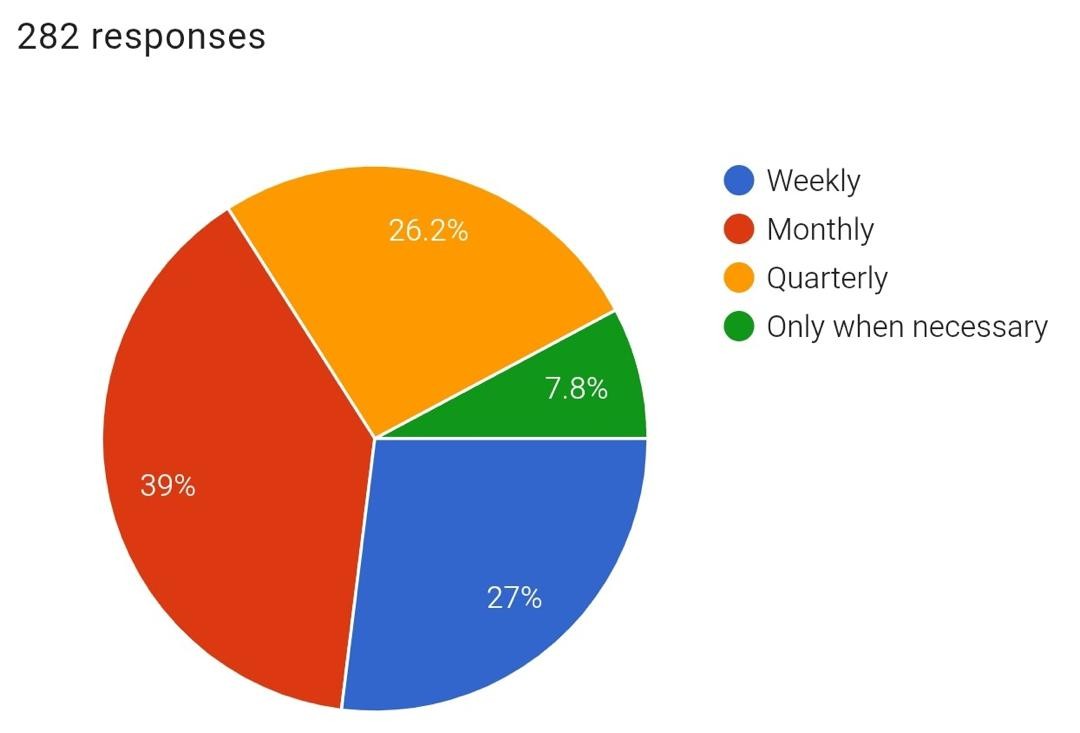
Monthly: 110 respondents (39.0%)
Weekly: 76 respondents (27.0%)
Quarterly: 74 respondents (26.2%)
Only when necessary: 22 respondents (7.8%)
Interpretation
The largest group preferred monthly updates, followed by weekly and quarterly communication.
The most important overall message is that 92.2% of respondents want regular updates on at least a weekly, monthly or quarterly basis, rather than communication only when necessary.
12. WHICH COMMUNICATION PLATFORMS SHOULD THE GFF PRIORITISE?
Respondents identified several important communication platforms.
The most preferred were:
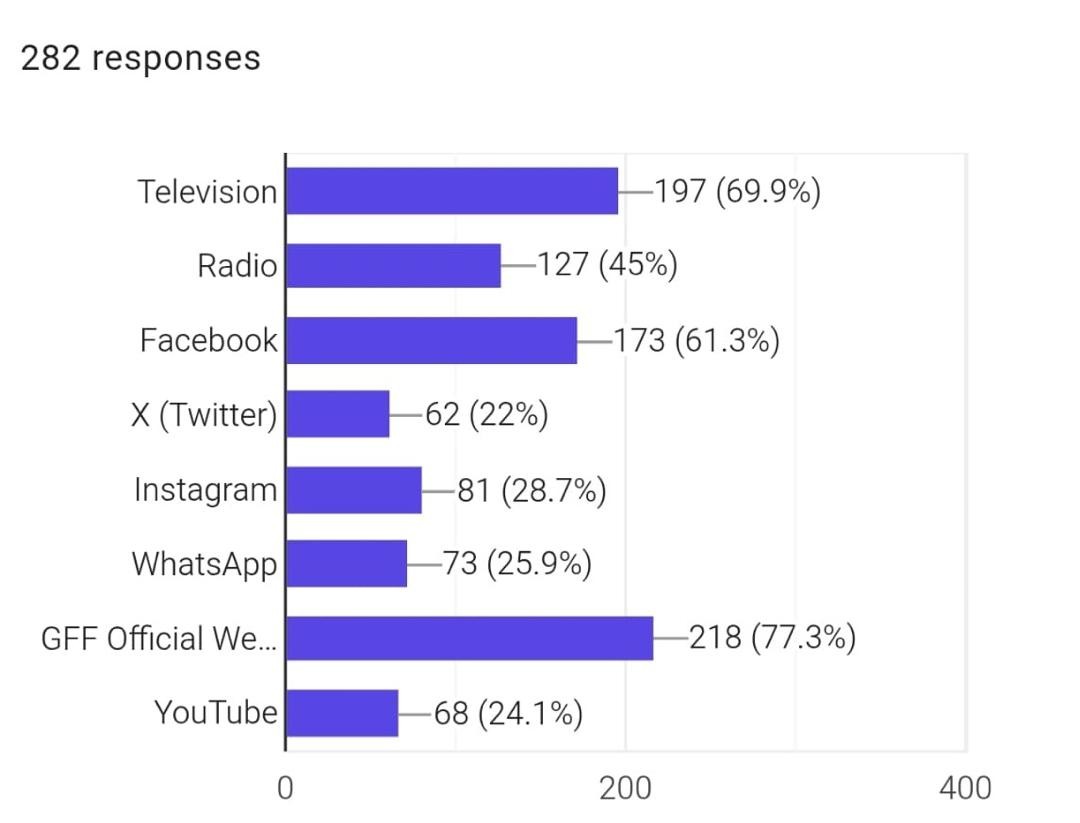
GFF Official Website – 218 (77.3%)
Television – 197 (69.9%)
Facebook – 173 (61.3%)
Radio – 127 (45.0%)
Instagram – 81 (28.7%)
WhatsApp – 73 (25.9%)
YouTube – 68 (24.1%)
X (Twitter) – 62 (22.0%)
Key Message
The public prefers a multi-platform communication strategy.
The official website should serve as an important source of authoritative information, while television, Facebook and radio can help the GFF reach a wider audience.
13. THE BIGGEST CHALLENGE FACING GAMBIAN FOOTBALL
Respondents were asked an open-ended question about the biggest challenge facing Gambian football.
Although answers were expressed in different words, several common themes emerged repeatedly:
1. Governance and Leadership
Many respondents referred to concerns about:
- Poor governance;
- Weak leadership;
- Poor management; and
- Lack of accountability.
2. Corruption and Transparency
Corruption, lack of transparency and concerns about how football resources are managed were among the most frequently repeated issues.
3. Infrastructure
Many respondents pointed to the lack of adequate football facilities, including playing fields and other infrastructure.
4. Financial Resources
Some respondents highlighted inadequate funding, limited financial support and the need for greater investment in football.
5. Development
Other responses called for stronger development of:
- Grassroots football;
- The domestic league;
- Young players;
- Clubs; and
- Football systems generally.
Overall Interpretation
The open-ended responses reinforce the findings from the structured questions. The major public concerns are strongly connected to governance, transparency, infrastructure, funding and long-term football development.
14. WHAT SHOULD THE INCOMING EXECUTIVE ACHIEVE IN ITS FIRST 100 DAYS?
The open-ended responses showed a strong desire for the incoming leadership to make an early and visible impact.
The main expectations can be grouped into the following areas:
Governance Reform
Respondents want the new leadership to establish a culture of:
- Transparency;
- Accountability;
- Professionalism; and
- Better management.
Clear Football Development Plan
Many respondents want the incoming Executive to present a clear plan for the development of Gambian football.
Infrastructure and Facilities
There is strong public pressure for practical steps towards improving football infrastructure.
Support for Grassroots and Domestic Football
Respondents want greater attention to:
- Grassroots football;
- Community football;
- Youth development;
- Clubs; and
- The domestic league.
Better Communication
The new Executive is expected to improve how it communicates with football supporters and the public.
15. ADVICE TO THE INCOMING GFF EXECUTIVE
The overall advice emerging from the responses can be summarised as follows:
Lead Gambian football with transparency, integrity and professionalism.
Respondents want the incoming Executive Committee to:
- Put football development ahead of personal interests;
- Listen to football stakeholders and supporters;
- Be transparent about decisions and finances;
- Develop grassroots and youth football;
- Improve the domestic game;
- Invest in infrastructure;
- Support clubs and players;
- Attract sponsors and investment; and
- Communicate regularly with the public.
16. MAJOR FINDINGS
The survey produced the following major findings:
Finding 1: A Clear Public Preference Emerged
Among the respondents, Sadibou Kamaso received the highest level of support at 61.0%.
Finding 2: Leadership Experience Matters Most
The most influential factor in choosing a candidate was leadership experience, followed by vision and integrity.
Finding 3: Governance Is the Public’s Number One Priority
79.4% of respondents selected improving governance and transparency as a top priority for the first 100 days.
Finding 4: Grassroots Football Cannot Be Ignored
Grassroots football was the second highest first-100-days priority and the area identified by the largest proportion of respondents as requiring urgent attention.
Finding 5: Infrastructure Remains a Major Concern
Better football facilities were identified as both an important first-100-days priority and one of the areas requiring urgent attention.
Finding 6: The Public Wants Financial Accountability
More than half of respondents selected financial accountability as one of the most important priorities for the incoming Executive.
Finding 7: Communication Is a Major Public Expectation
An overwhelming 98.2% said the GFF should communicate regularly with football supporters and the public.
17. RECOMMENDATIONS
Based on the survey findings, the following recommendations are made to the incoming GFF Executive Committee:
1. Make Governance and Transparency an Immediate Priority
The incoming leadership should take early steps to strengthen transparency, accountability and confidence in football governance.
2. Develop a Clear Public Football Development Roadmap
The GFF should communicate a clear plan showing how it intends to develop:
- Grassroots football;
- Youth football;
- Women’s football;
- Clubs;
- The domestic league;
- National teams; and
- Football infrastructure.
3. Strengthen Grassroots Football
A sustainable football system must be built from the grassroots. Greater investment and attention should therefore be given to community and youth development structures.
4. Prioritise Infrastructure
The incoming leadership should develop a realistic strategy for improving football facilities across the country.
5. Improve Financial Accountability
The GFF should strengthen public confidence through clear and responsible financial management and regular reporting.
6. Improve Public Communication
The Federation should establish a regular communication calendar.
A practical approach could include:
- Monthly public updates;
- Regular media engagements;
- Timely updates through the official GFF website;
- Increased use of television, Facebook and radio;
- Clear communication on major decisions and programmes.
7. Increase Sponsorship and Investment
The GFF should actively develop stronger partnerships with the private sector, sponsors and development partners.
8. Strengthen Engagement With Football Stakeholders
The incoming Executive should establish regular opportunities to engage:
- Fans;
- Clubs;
- Players;
- Coaches;
- Journalists;
- Regional associations;
- Sponsors; and
- Other stakeholders.
18. CONCLUSION
The People’s Choice Poll provides an important snapshot of the views and expectations of 282 respondents on the future of Gambian football.
The survey found a clear public preference among the respondents for Sadibou Kamaso in the presidential race. However, the findings go beyond individual candidates.
The strongest message from the public is about what the next leadership should do.
Respondents want a GFF that is:
- More transparent;
- More accountable;
- More focused on grassroots development;
- Better equipped with football infrastructure;
- More effective in attracting investment;
- More supportive of the domestic game; and
- More open and responsive to the football public.
The challenge for the incoming Executive Committee will therefore not simply be to win the election, but to respond to the expectations of the football community.
The public has spoken through this survey.
The message is clear:
Gambian football supporters want better governance, stronger grassroots development, improved infrastructure, financial accountability and regular communication with the people.
IMPORTANT DISCLAIMER
This survey was conducted as a public perception exercise and class project by Advanced Diploma 10 students of the Media Academy for Journalism and Communication (MAJaC). The poll does not constitute an official election, scientific national poll, or prediction of the official GFF election outcome. Participation was voluntary, and the findings represent the views of the 282 respondents who completed the survey. The official GFF election remains the responsibility of the authorised electoral process and eligible delegates.